
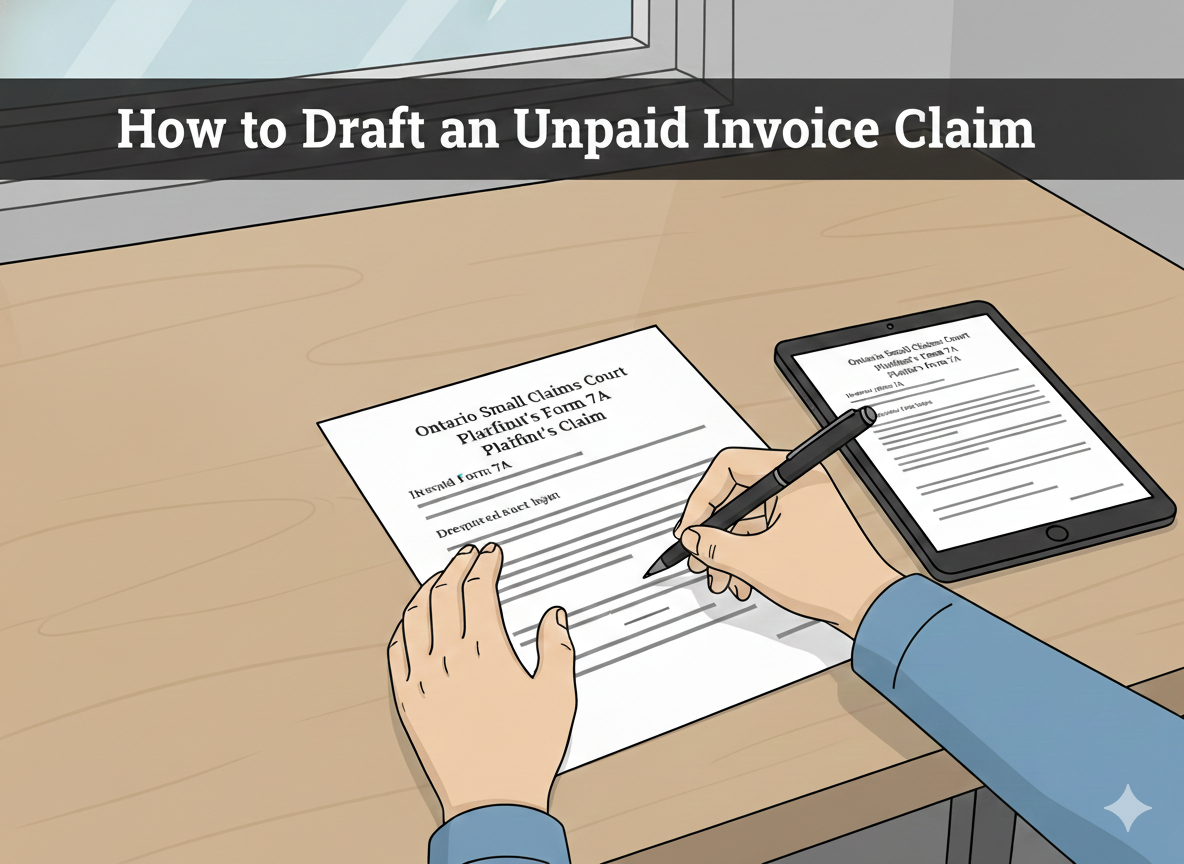
Unpaid invoices are one of the most common issues faced by small businesses and professionals in Ontario. When a client or customer fails to pay for services rendered, filing a claim in Small Claims Court can be an effective solution. However, preparing a claim that meets court requirements can be time-consuming and prone to errors if not done carefully.
This guide walks you through the step-by-step process to draft an unpaid invoice claim properly and highlights ways to save time and reduce mistakes — including using a professionally designed plaintiff claim template.
Step 1: Identify the Parties
Start by clearly stating the details of the plaintiff (the business or individual claiming payment) and the defendant (the party who owes payment). Include:
- Full legal name of each party
- Business registration details, if applicable
- Full address (city, province)
- Type of business or services provided
Example:
“The plaintiff is a company duly incorporated pursuant to the Laws of the Province of Ontario, with offices situate in the City of Toronto, in the Province of Ontario.
The defendant is a company duly incorporated pursuant to the Laws of the Province of Ontario, with offices situate in the City of Ottawa, in the Province of Ontario.”
Other examples:
- The plaintiff is XYZ Cleaning Services Inc., incorporated under the laws of Ontario, with offices in London, Ontario.
- The defendant is DEF Property Management Ltd., incorporated under the laws of Ontario, with offices in Kitchener, Ontario.
- The plaintiff is John Smith, operating a sole proprietorship as Smith Design Studio, located in Ottawa, Ontario.
- The defendant is Creative Marketing Solutions Inc., incorporated under Ontario law, with offices in Toronto, Ontario.
Step 2: Describe the Services Provided
Detail the services rendered or goods supplied. Be specific:
- Type of service or product
- Dates services were provided
- Hourly rates or agreed fees
Example:
“That on or about January 15, 2025, the Plaintiff provided bookkeeping and financial reporting services to the defendant and invoicing for same.”
Other examples:
- “Between January 10, 2025, and March 5, 2025, the plaintiff supplied cleaning services at the defendant’s office premises located in downtown Toronto.”
- “On April 1, 2025, the plaintiff delivered graphic design services, including logo development, website graphics, and marketing materials, to the defendant.”
Step 3: Outline the Agreement and Payment Terms
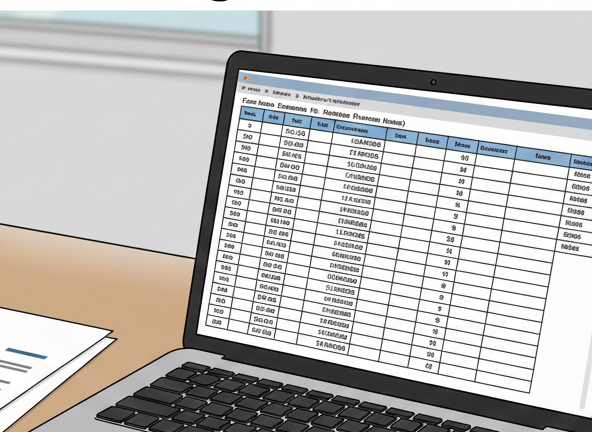
Explain the agreed-upon payment structure:
- Hourly vs. fixed monthly fees
- When payment was expected (e.g., within 30 days of invoice)
- Any written or implied promises made by the defendant
Example:
“The plaintiff states that between January 15, 2025, and March 31, 2025, at the request of and with the agreement of the defendant, the plaintiff, its agents and employees provided services to the defendant on an ‘as needed’ basis at an hourly rate of $150 although such services were not utilized during this period. The defendant indicated that it preferred a monthly fee arrangement of $2,000 plus applicable taxes, payable within 30 days of invoice receipt.”
Other examples:
- “The parties agreed that payment for goods supplied would be made in full within 15 days of delivery, with late fees of 2% per month on overdue balances.”
Step 4: Document Any Issues or Late Payments
Include a clear account of what happened:
- Partial payments or missed payments
- Communications with the defendant regarding the unpaid amount
- Any attempts to resolve the matter before filing
Example:
“The plaintiff states that while the defendant rarely paid the invoices properly tendered in the manner agreed between the parties, it made partial payments leaving outstanding balances. Despite repeated requests, the defendant failed to pay invoices for March and April 2025, totaling $3,500.”
Step 5: Claim Amounts and Damages
Clearly state the amount owed, including:
- Outstanding invoice totals
- Applicable taxes
- Any additional costs, such as late fees or filing fees
Example:
“The plaintiff claims $6,000, representing the unpaid invoices for services rendered, plus applicable HST. The plaintiff also claims costs on a full indemnity basis in accordance with Section 29 of the Courts of Justice Act, R.S.O.”
Step 6: Attach Evidence
Evidence strengthens your claim and can include:
- Copies of invoices (with dates and amounts)
- Contracts or agreements
- Correspondence requesting payment
- Statements of account
Example:
“Attached as Tab 1 is the statement of account reflecting all invoices issued to the defendant between January 1 and March 31, 2025. Attached as Tab 2 are copies of all invoices sent to the defendant, including emails confirming receipt. Attached as Tab 3 is a letter dated April 10, 2025, demanding payment of the outstanding balance of $3,500.”
Step 7: Draft the Claim Properly
Each paragraph should clearly state:
- Facts about the services or goods provided
- Representations or promises by the defendant
- How the defendant breached their obligations
- The total amount claimed
Example:
“The defendant represented that payment would be made within 30 days of invoice receipt but has failed to pay the amounts properly due. Despite repeated requests and assurances, the defendant has unjustly retained the benefits of the services provided without making payment.”
Step 8: File the Claim
Once drafted:
- Complete the Plaintiff Claim Form (Form 7A) available from the Ontario Court Forms website.
- Attach Schedule A (your detailed claim paragraphs) and all evidence.
- File with the Small Claims Court in the jurisdiction where the defendant resides.
- Serve the claim properly according to court rules.
Step 9: Follow Up and Prepare for Court
- Keep a copy of everything filed
- Track deadlines for responses
- Prepare to provide organized evidence to the court
Step 10: Save Time and Reduce Errors With a Template
Drafting a claim manually can take hours and risks mistakes that delay your case. Using a ready-to-use plaintiff claim template ensures:
- All necessary paragraphs are included
- Proper legal phrasing is used
- Evidence tabs are organized
- Filing is faster and more accurate
[Download a free skeleton template here] or consider purchasing the full, professionally drafted version for all your unpaid invoice claims.
✅ Conclusion
Filing an unpaid invoice claim in Ontario Small Claims Court doesn’t have to be stressful. By following these steps and using a structured template like the one illustrated above, paralegals and small business owners can save time, reduce errors, and increase their chances of a successful claim.
